Written By
Chelsey Morphy
11 December 2025
7
Min. Read Time
Save This Article
Category
Read Time
Minutes
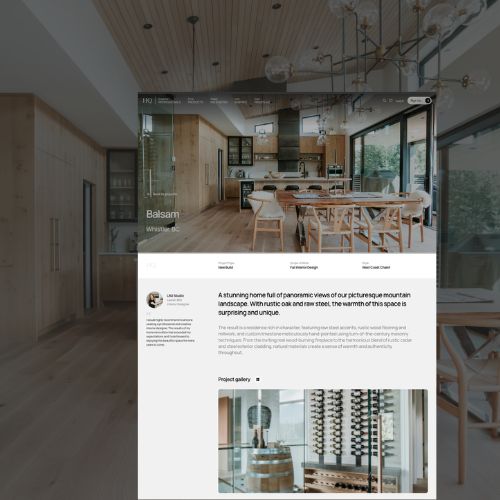
For years, open-plan living was treated as the answer to modern family life. Now, homeowners and designers are reconsidering what an open floor plan actually gives us and what it takes away.
For more than a decade, the open floor plan has been one of the defining features of contemporary residential design. Kitchens opened into living rooms. Walls disappeared. Sightlines stretched from the front door to the backyard. The appeal was easy to understand. More connection. More light. More flexibility. A home that felt larger without necessarily adding more square footage.
But the conversation is changing. After years of living, working, entertaining and raising families in these spaces, we're getting better at recognizing what an open plan does well and where it can fall short.
That doesn't mean the open floor plan is disappearing. It means we're asking a better question: How do you want your home to feel, and how do you actually want to live in it?
The Case for Open
Open-plan spaces can be remarkably effective when they're designed around how the household actually lives.
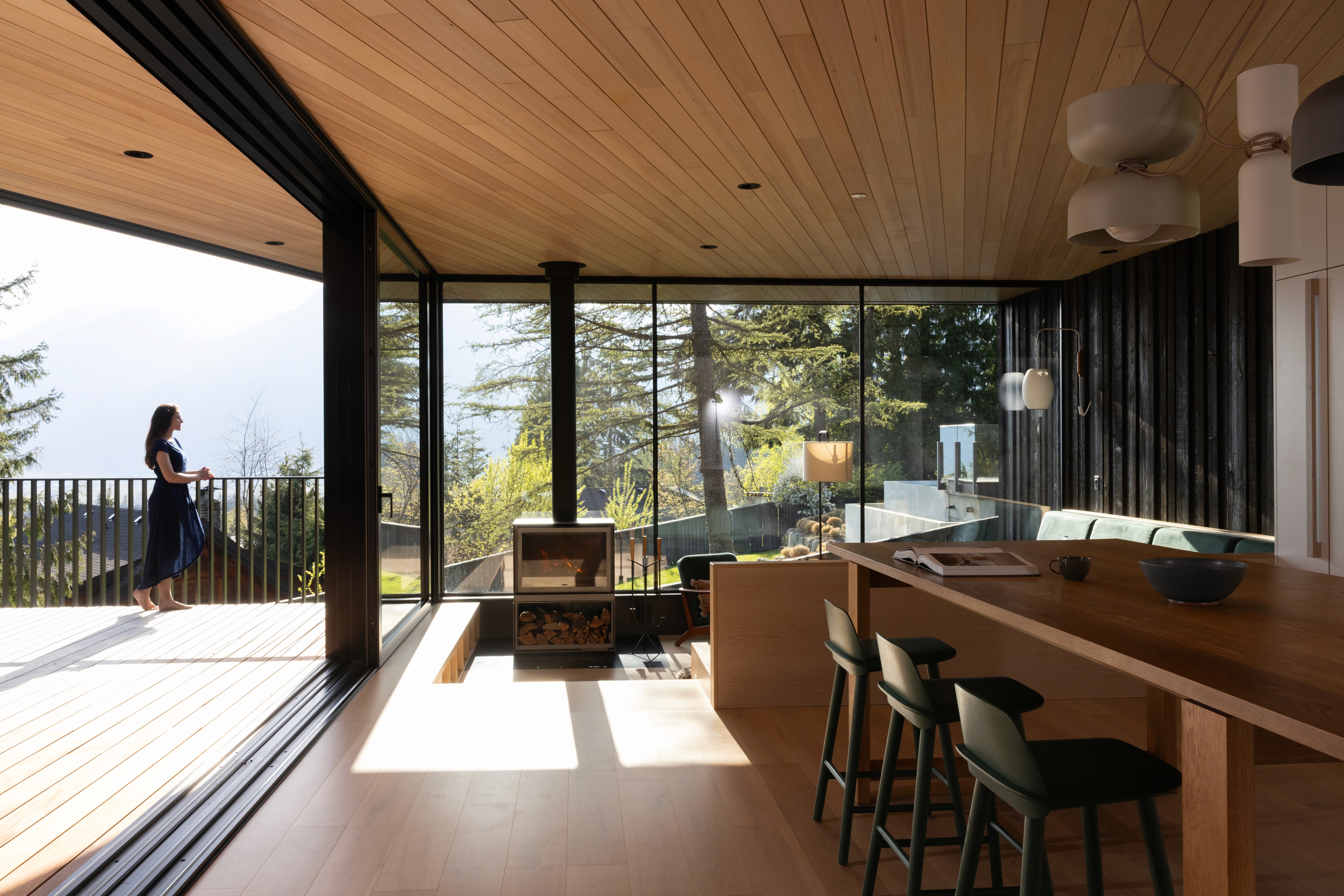
A kitchen that opens to a family room can make everyday life feel connected. Parents can prepare dinner while keeping an eye on children. Guests can gather around an island while someone cooks. Large windows can pull natural light deep into the home, and a continuous view can make several smaller areas feel like one generous space.
For homes designed around entertaining, the advantages can be even more apparent. An open kitchen, dining and living area can allow a gathering to move naturally through the house rather than forcing everyone into one room.
The best open plans don't simply remove walls. They create relationships between spaces.
That distinction matters. An open room without thoughtful zoning can feel like one very large, undefined space. A well-designed open plan can still have distinct areas for cooking, dining, relaxing and gathering. The architecture does the work that walls once did.
But Open Doesn't Mean Better
The popularity of open-plan design sometimes created the impression that walls were inherently outdated. They aren't. Walls provide privacy. They contain sound. They hide mess. They allow one room to feel different from the next. And those things become increasingly valuable as our homes are asked to do more.
The kitchen is no longer just a kitchen. The dining room may become an office. The living room might become a place for homework, television, conversation and quiet reading—all within the same afternoon. When every room is connected, every activity becomes connected too. The blender becomes everyone's problem. The dishes become visible from the living room. Someone working at the kitchen island is still part of the conversation happening across the room.
For some households, that is exactly what they want. For others, it becomes exhausting.
The Return of the Room
This is where the renewed interest in more enclosed spaces becomes interesting. Closed or partially enclosed rooms allow different parts of the home to have different purposes.
A library can be quiet. A dining room can be prepared for guests without the kitchen becoming part of the scene. A study can have a door. A family room can be comfortable and informal without needing to visually coordinate with the kitchen beside it.
And there is something else that happens when rooms are separated: The experience of moving through the home changes.
Instead of seeing everything at once, you discover it. A doorway frames a room. A hallway creates anticipation. A view is revealed rather than immediately presented. For a high-end custom home, that can be an important part of the architecture.
The Middle Ground
The choice doesn't have to be entirely open or entirely closed. Some of the most successful homes use a combination of both. A large central living space might connect the kitchen and dining room, while a nearby library or sitting room is enclosed. A kitchen might be open to the family room but have a separate pantry or back kitchen where preparation can happen out of sight. Glass doors can provide separation without sacrificing light. Pocket doors can allow a room to open when you want connection and close when you want privacy. A partial wall can create definition without completely dividing two spaces.
The architecture can give you both connection and separation when the layout is designed intentionally.
Think About Sound
One of the most overlooked consequences of an open floor plan is sound. Hard surfaces, high ceilings and large connected spaces can allow noise to travel much farther than expected.
Consider a kitchen with stone countertops, cabinetry, hardwood floors and a large open ceiling connected directly to a living room. Beautiful? Absolutely. Quiet? Not necessarily.
In a major renovation or custom home, acoustics should be considered alongside the visual design. Where will sound travel? Where will you want quiet? Will someone be able to work while another person watches television? Will the dishwasher be running while you're trying to have dinner?
These aren't minor lifestyle questions. They're design questions.
Think About the Way You Entertain
The right floor plan depends heavily on how you host.
If your ideal gathering is casual, people moving between the kitchen, island, dining table and outdoor space, an open arrangement may work beautifully. If you prefer more formal entertaining, you may want spaces that can be prepared and presented separately.
Perhaps the dining room should have a direct relationship with the kitchen but still feel distinct. Perhaps the living room should be removed from the noise of food preparation. Perhaps you want a bar, lounge or library that becomes its own destination within the house.
There is no universal answer.
The floor plan should support the way you actually entertain, not the way a floor plan trend tells you that you should.
Think Beyond Today
This is particularly important when you're designing a custom home. You aren't designing for the version of your family that exists on the day you move in. You're designing for the years ahead. Children grow. Parents age. Work changes. Hobbies change. The way you entertain changes. A room that feels unnecessary today may become one of the most valuable rooms in the house later. A completely open floor plan may work beautifully while your children are young but feel different when everyone needs more privacy.
That doesn't mean you should design for every hypothetical future. It means flexibility should be considered alongside aesthetics.
What About Resale?
Resale can be part of the conversation, but it shouldn't automatically dictate the design of a custom home. If you intend to live in the house for decades, designing around someone else's future preferences can mean compromising the way you want to live now.
That doesn't mean ignoring broadly desirable features. It means understanding which choices are personal and which are likely to affect the home's long-term appeal.
A beautifully designed home with thoughtfully proportioned rooms, good natural light, strong circulation and a logical relationship between spaces isn't going to become undesirable simply because it has a few doors.
The Better Question
The open-versus-closed debate can become surprisingly binary.
"Open is modern." "Closed is traditional." "Open is social." "Closed is private."
But homes are more nuanced than that.
The real question isn't whether your floor plan should be open or closed. It's where you want connection and where you want separation.
Where should sound travel? Where should it stop? Which spaces should feel generous? Which should feel intimate? What do you want to see when you walk into the house? What do you want hidden? Where do you gather? Where do you retreat? Where do you want the architecture to encourage people to stay? And where do you want it to give them somewhere to go?
Those questions will tell you far more about your ideal floor plan than a trend ever will.
The Takeaway
Open floor plans aren't going away, but the idea that every home needs to be completely open is becoming less convincing. For a custom home or major renovation, that is the opportunity. Don't start by asking how many walls you should remove.
Start by understanding how you want to live and let the architecture create the right balance of connection, privacy, light, sound and movement around it.
A good floor plan doesn't follow a trend. It makes the way you live feel inevitable.
Chelsey Morphy
Home Consultant
Homeowner HQ
Chelsey Morphy is an architectural designer, home consultant, and the founder of Homeowner HQ. With nearly two decades of experience in new home and renovation design, she brings a rare dual perspective as both a designer and homeowner. Her mission is to bridge the gap between homeowners and industry professionals by offering education, guidance, and real-world support that simplifies the building process. Her work has been featured on HGTV and trusted by hundreds of clients, contractors, and fellow designers alike. Now she’s creating the go-to platform, Homeowner HQ, for planning, budgeting, and managing home projects with confidence.