Written By
Chelsey Morphy
30 July 2026
4
Min. Read Time
Save This Article
Category
Read Time
Minutes
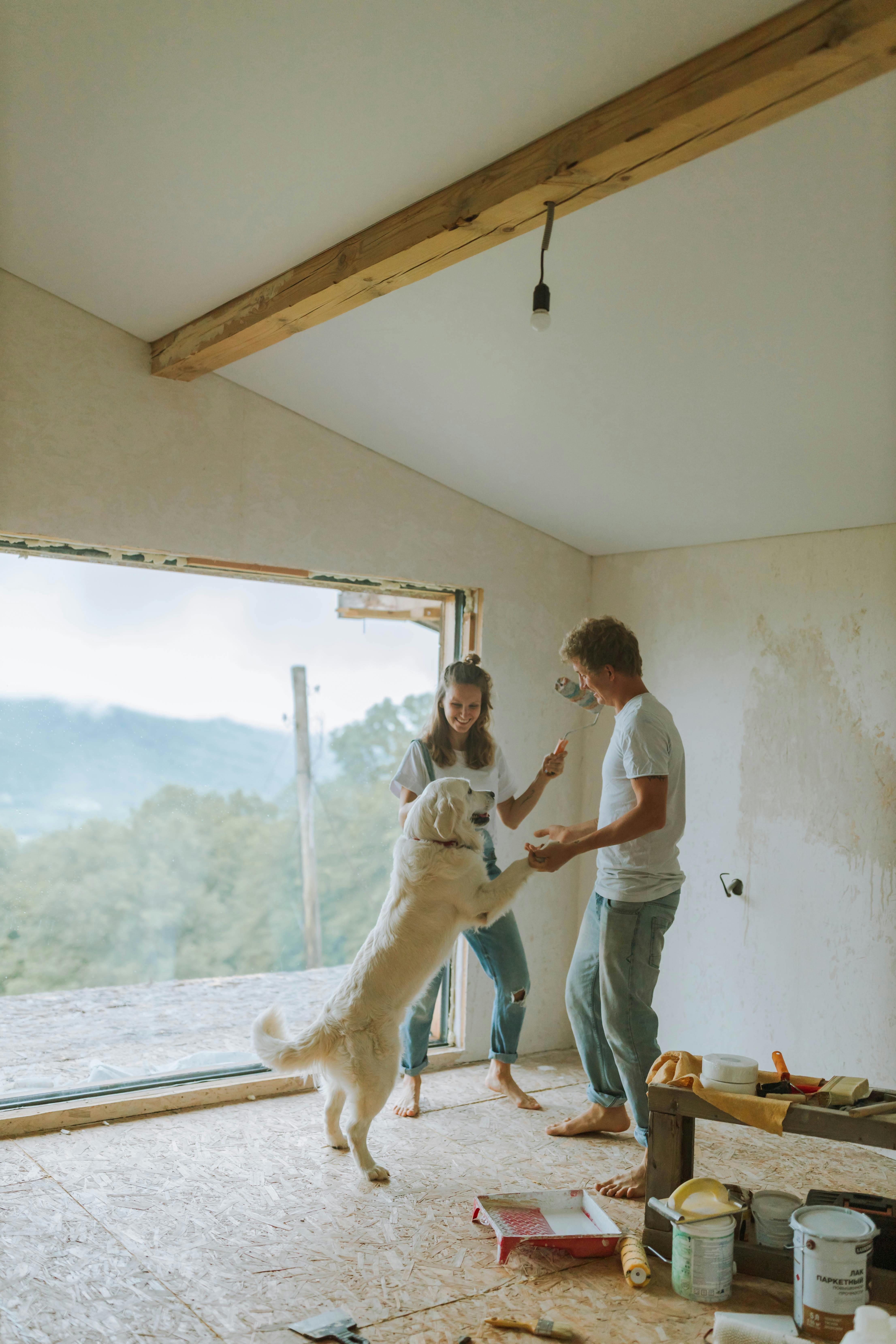
Until you’ve washed dishes in a bathtub, you’ll never truly know what it’s like to live through a renovation. Or hung plastic dividers and yet still found drywall and sawdust everywhere or swept a plywood floor every day, five times a day.
Of course it's not normally by choice. No one really wants to live in their home when it's being renovated or built. And ours was certainly not by choice. It was March of 2020. Yes, that year. That month. And that was our only option during a pandemic. Travel restricted us from moving from our home town to our new town, so we had no other choice than to move in.
Move in to an insulated, drywalled shell with plywood floors, no kitchen, and no sinks. Only one working bathtub and toilet. It wasn't easy. It was messy, uncomfortable, and one of the best decisions we made.
Here’s how we survived:
1. Make a Bathroom Priority #1
You can live without a dining room. You can live without all the bedrooms finished. Mattresses on the floor for the whole family, in one room, would suffice for some time, but you can’t live without a working bathroom. One toilet and tub is all you need to start. Only then did we move in. And yes, we washed our dishes in the bathtub until our kitchen sink was ready.
2. Build a Temporary Kitchen
Cabinetry is a long, expensive process that we didn't want to rush. So for the time being, we built a temporary kitchen: A simple 2x4 frame, plywood counter kitchen with shelves for storage, appliances in their designated locations, and a cheap stainless steel utility sink. It wasn't pretty but it gave us structure and routine—something you desperately need in chaos.
3. Carve Out a “Normal” Corner
We set up one room that felt like home. Our primary bedroom was unfinished, flooring, no trim, or paint, but it was away from most of the work moving forward. So we set up a small area rug, couch, and books and toys for our 3 yr. old daughter. I designed projects from the couch and my daughter played on the floor. It was our retreat away from dust, noise, and saws. Outside we set up a sandbox and left chalk to colour the plywood with.
4. Work Wherever You Can
For those who work from home, this part can be excruciating. Before we had our internet set up, I ran client meetings from my car. Since the property is in a poor reception area and all coffee shops were closed due to a pandemic, I parked outside places with Wi-Fi and answered emails, sent drawings, and jumped on Zoom calls. Thankfully my CAD program to design houses didn't require a connection or it would have done me in. While it wasn't ideal, it kept me and my very busy business moving forward.
5. Stay Out of the Way
Trades need room to work and the more you or your personal items are in the way, the longer it takes.
Here’s how we handled it:
Bedrooms get finished first (they’re the simplest).
That’s where your “home” goes—clothes, toys, and daily essentials (including toiletries).
Everything else? Packed up and pushed out of the way or, if it's a new house, in storage.
It keeps the trades moving, reduces accidents, and saves you from living in constant chaos (or your items getting damaged).
6. Treat It Like an Adventure
Camping chairs became our furniture and trips to the local pool gave us hot showers, a hot tub, and family swims. We stripped down to the essentials and let the rest slide because we knew it was only temporary.
7. Don't Rush the Process
There will come a time (probably several) where you'll want the project to be over. And if you're living in the home while construction is happening, the push to complete will be even stronger. You'll want to make quick decisions just to speed things up.
Don't.
Take a breath and remind yourself that this part is temporary. Whether your living in construction or not, making rash decisions are usually the decisions homeowners regret the most.
The Truth About Living Through a Renovation
It will feel slow, messy and it will certainly test your patience. But it’s not forever. And while not everyone can (or is allowed to) live in a home under construction, it allowed us to be close to the project while the world was falling apart around us. It gave us even more clarity on the finishing details and, looking back, the challenges turned into memories. And those memories became part of the story of our home.
Chelsey Morphy
Home Consultant
Homeowner HQ
Chelsey Morphy is an architectural designer, home consultant, and the founder of Homeowner HQ. With nearly two decades of experience in new home and renovation design, she brings a rare dual perspective as both a designer and homeowner. Her mission is to bridge the gap between homeowners and industry professionals by offering education, guidance, and real-world support that simplifies the building process. Her work has been featured on HGTV and trusted by hundreds of clients, contractors, and fellow designers alike. Now she’s creating the go-to platform, Homeowner HQ, for planning, budgeting, and managing home projects with confidence.